Sometimes the Best Homeschool Decision Is to Set Something Aside
I don't know when curriculum quietly becomes a promise, but somewhere along the way it often does.
We spend weeks choosing it. We compare reviews, ask friends what they loved, flip through sample pages, and finally settle on something that feels like the right fit. Then, almost without realizing it, we stop asking whether it's helping our child and start asking whether we can finish it.
I've caught myself doing exactly that.
There have been curriculum books on my shelf that I held onto far longer than I should have, not because they were serving us well, but because I couldn't shake the feeling that setting them aside meant I had made a mistake. Looking back, I realize I wasn't protecting my child's education. I was protecting my own sense of having made the "right" decision.
The older I've gotten as a homeschool parent, the more I've noticed how easily those two things become tangled together.
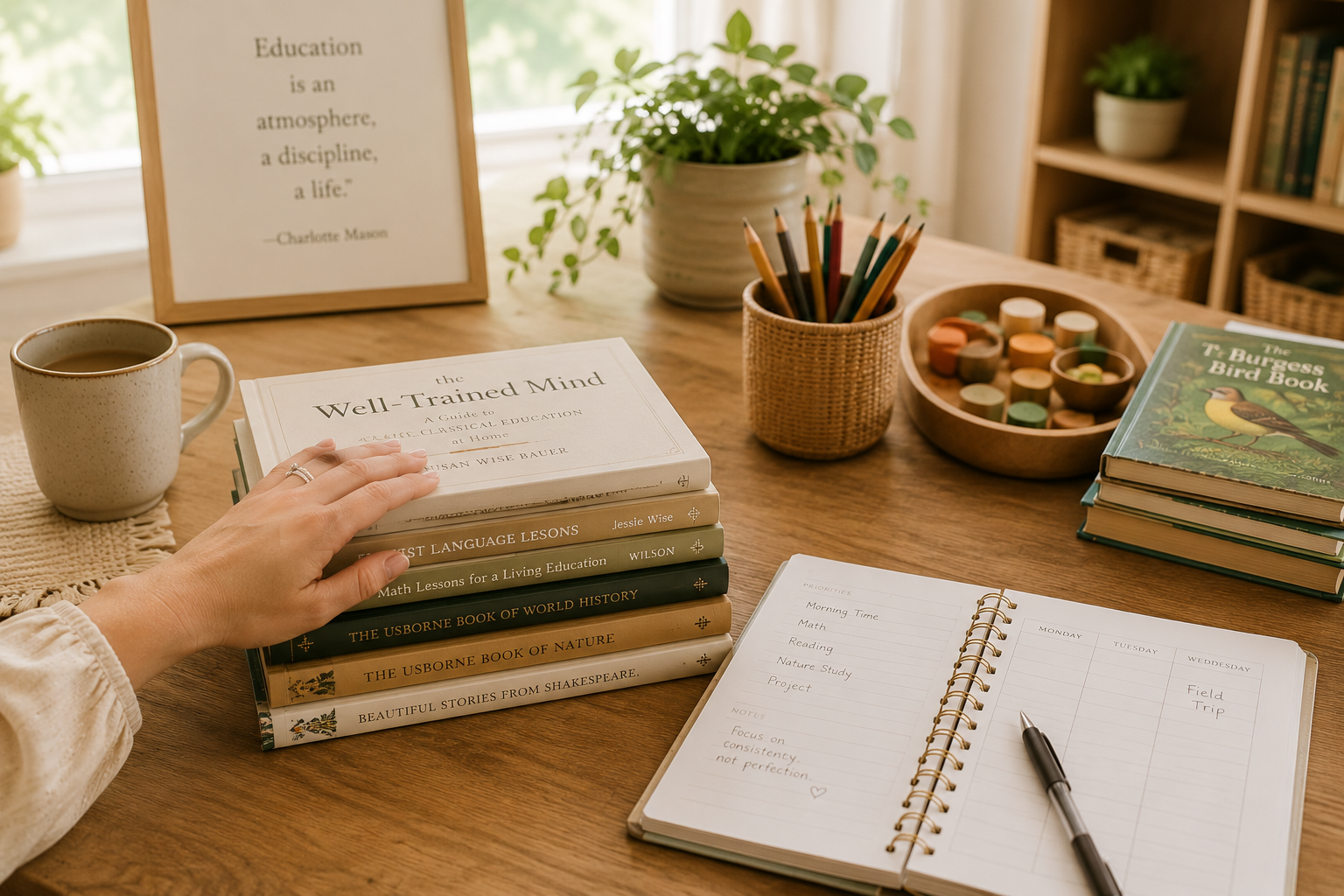
One of the gifts homeschooling gives us is the opportunity to pay close attention to our children. We notice when something finally clicks. We notice when frustration lingers longer than it should. We notice when a child who once loved a subject suddenly begins to dread it. Those observations matter because they're telling us something that no curriculum could have known when it was written.
Sometimes they tell us to slow down.
Sometimes they tell us to stay the course.
And every once in a while, they tell us it's time to let something go.
I've found that asking better questions usually leads to better decisions. Instead of asking, "Can we just finish this?" I try to ask, "Is this still helping us accomplish what we hoped it would?" That question changes everything. It shifts my attention away from the book and back to the child sitting in front of me.
The truth is, I've never looked back years later and wished we had completed a few more workbook pages.
What I remember are entirely different things.
I remember the afternoon a difficult concept finally clicked. I remember watching confidence slowly replace frustration. I remember the conversations that wandered far beyond the lesson plan because someone became genuinely curious. Those are the moments that shaped our homeschool far more than whether every chapter was completed.
I think that's why I've become less attached to finishing curriculum and more attached to noticing children.
Curriculum is one of the tools we use to educate our kids, but it was never meant to become the measure of whether we're succeeding. Sometimes a curriculum serves your family for years. Sometimes it serves you for one season before you've learned enough to recognize that something else would be better. Neither outcome makes the curriculum a failure, and neither outcome makes you one either.
Maybe that's one of the quiet freedoms of homeschooling.
We're allowed to respond to what we learn.
We're allowed to grow alongside our children.
And we're allowed to make decisions based on who they are today instead of feeling bound by the plans we made months ago.
There are certainly times when perseverance is exactly what a family needs. Not every difficult week is a reason to change course. But I've also learned that wisdom and perseverance aren't always the same thing. Sometimes wisdom looks like continuing. Sometimes it looks like supplementing. And sometimes wisdom quietly closes the book, places it back on the shelf, and moves on without carrying guilt along for the journey.
Where Coaching Can Help
One thing I've noticed over the years is that families rarely come to a New Client Planning Session because they need someone else to choose their curriculum. More often, they're looking for clarity. They're trying to sort through the emotions, the expectations, and the options so they can make a thoughtful decision with confidence.
Sometimes that conversation leads to a new curriculum.
More often, it simply reminds a parent that the goal has never been to finish every book. The goal has always been to help the child sitting in front of them flourish.