When Confidence Starts Growing (and Why It Can Feel Off at First)
There’s a point in homeschooling where things start to feel a little… off. Not in a clear “this isn’t working” kind of way, but just different. Your child is a little more independent, but also a little inconsistent. They don’t need you as much, but they still need you sometimes. The day moves forward, but not always smoothly. And if you’re not expecting this phase, it’s really easy to start wondering if something’s wrong.
But more often than not, this is actually where confidence starts to grow.
What Confidence Actually Looks Like
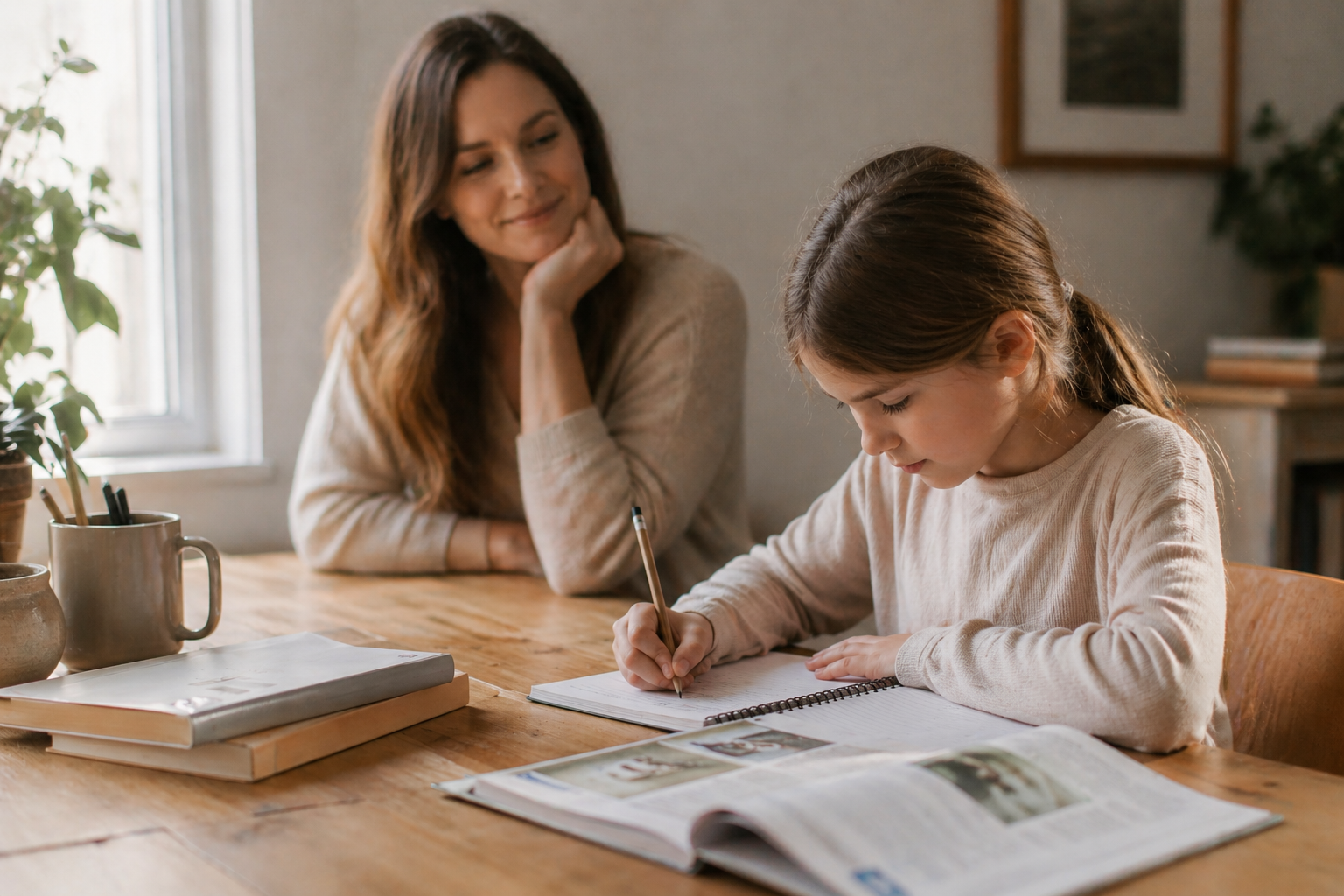
I think a lot of us expect confidence to look obvious, like things clicking quickly, work getting easier, or less struggle overall. But that’s not usually how it shows up. Most of the time, it looks like your child starting something without being asked, trying again after getting stuck, or staying with something just a little longer than they used to. It’s quieter than we expect, and sometimes it shows up alongside inconsistency, not instead of it.
Why This Phase Feels Unsettling
That’s the part that can feel unsettling, because your role starts to shift here. You’re not needed in the same constant, hands-on way anymore, but you’re not completely hands-off either. You’re somewhere in the middle, and that middle space can feel unclear. You start asking yourself things like, “Should I step in more?” or “Should I let this play out?” or “Am I doing enough right now?” And honestly, those questions are completely normal.
When things feel off, the natural instinct is to fix it. To step in quicker, adjust the plan, add more structure, or guide things more closely. But too much intervention during this phase can actually interrupt the very thing that’s starting to build. Confidence doesn’t come from being walked through every step. It comes from trying, adjusting, and figuring things out with support nearby, not constantly in front.
The Mistake That Interrupts Growth
Instead of doing more, this phase is really about doing things differently. It’s more observing than directing and more intentional stepping in, instead of constant involvement. It’s giving your child space where they’re ready for it, while still being close enough to support when they need it. It’s quieter work, but it matters so much.
This is also the point where a lot of parents start to feel the weight of homeschooling in a new way. Not because something is going wrong, but because holding that balance consistently, while also managing everything else, can start to feel like a lot.
When It Starts to Feel Like Too Much
This is usually when the thought creeps in: “This is working. I just don’t know if I can keep doing all of it on my own.” And that doesn’t mean you’re failing. It usually means you’ve reached a point where your child needs steady structure, consistent rhythm, and support that’s hard to carry alone long term.
For some families, that might look like simplifying. For others, it might mean adjusting expectations. And sometimes, it looks like bringing in support in a way that still keeps you at the center of your homeschool. There’s no one right answer here, just what’s sustainable for your family.
Where Support Fits In
And sometimes it’s just recognizing that you’re in a different phase than you were before. Not a failing one or a broken one, just one where your child is starting to carry more, and you’re learning how to support that without holding all of it yourself. That shift can feel a little uncertain at first, and that’s okay. You don’t have to rush to fix it or figure everything out all at once. Just staying close, paying attention, and responding as things unfold is enough right now.
Let It Be Quiet
If things feel a little off right now, before you change everything, just pause. Take a closer look. There’s a good chance nothing is actually breaking. Something is building, and it doesn’t always look obvious while it’s happening.
You don’t have to rush this. You’re allowed to take it one step at a time 🤍
If you’re in this phase and trying to figure out what support could look like for your family, you can learn more about how we come alongside homeschoolers at Sweet Potato Kids.