Learning Isn't Confined to Books
There was a day a few years ago that I almost wrote off as a wasted homeschool day.
The morning didn't go according to plan. We got a late start, someone was grumpy, and somewhere between breakfast and lunch the carefully written schedule I had made for myself quietly fell apart. We never opened one of the main curriculum books I'd planned to use, and by the end of the afternoon I remember thinking, Well...today was kind of a loss.
It's funny how often I think back to that day now. Not because of what we accomplished academically, but because of everything I completely overlooked while I was living it.
I remember one of my girls helping me double a recipe because we were cooking dinner for friends. There were measuring cups scattered across the counter and questions about fractions that didn't feel like math because no one knew they were supposed to. I remember another conversation that started with a simple "why?" and somehow turned into twenty minutes of looking things up together. I remember a disagreement between siblings that took longer to work through than I would have liked, but by the end of it they had both apologized without me telling them exactly what to say.
None of that was on the lesson plan.
At the time, none of it felt like school.
Looking back, I'm not so sure.
I wonder if homeschool parents sometimes give curriculum too much credit and everyday life too little.
Don't misunderstand me—I love good curriculum. I spend a lot of time helping families choose it well because I believe it matters. Good resources can make our jobs easier and give our children wonderful opportunities to learn.
But curriculum has never been the only place learning happens.
Sometimes I think we accidentally train ourselves to notice only the things we can check off. We remember whether math got finished, but forget the conversation that required careful thinking. We remember skipping science, but overlook the child who spent half an hour trying to figure out why something worked the way it did. We notice the unfinished workbook and completely miss the confidence our child gained by trying something difficult for the first time.
I've started wondering if I was measuring learning with the wrong ruler. The things I could easily count weren't always the things that mattered most.
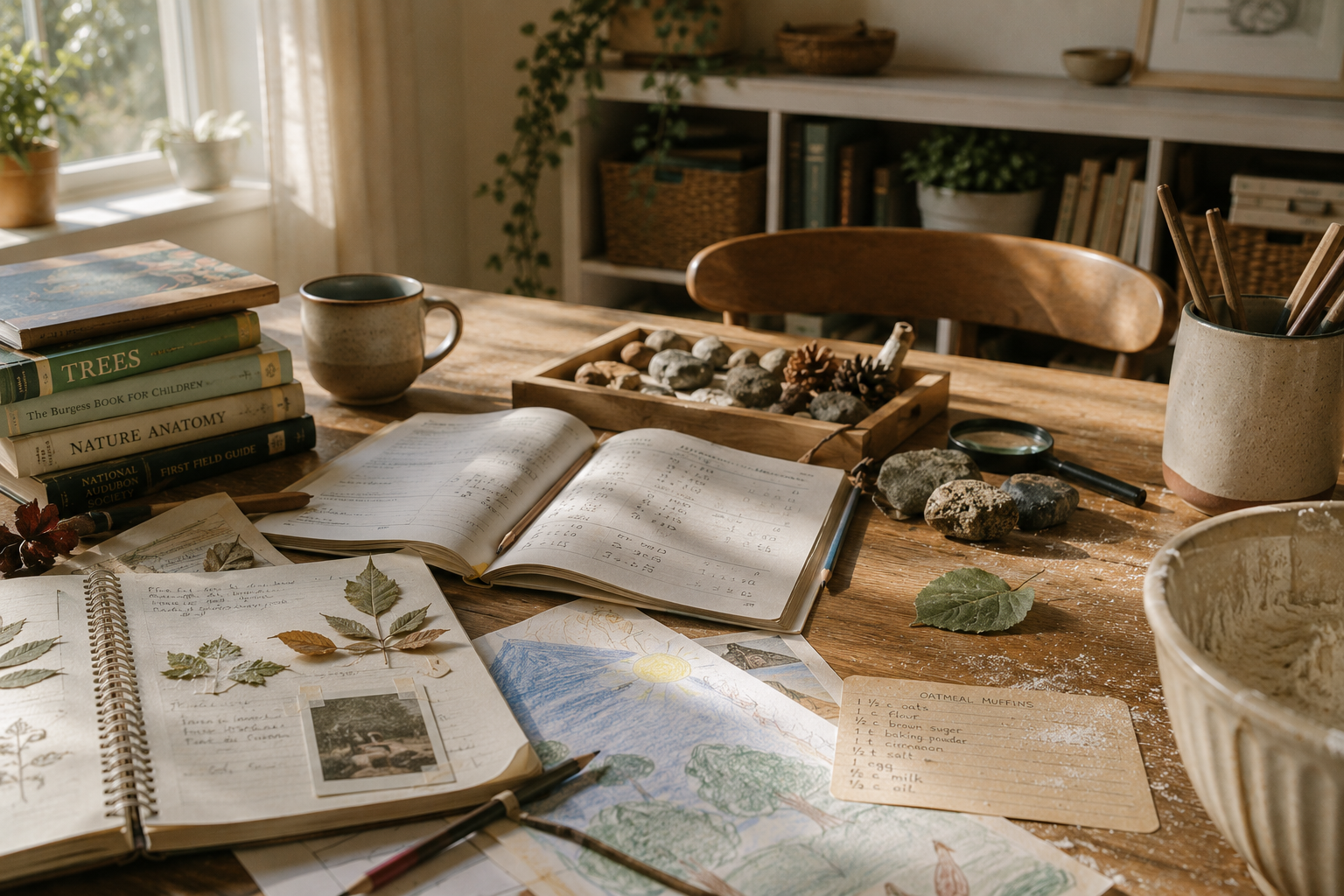
The older my children get, the more obvious that becomes. When I think back over the years, I don't immediately remember which history curriculum we used in second grade or whether we finished every language arts lesson. What I remember are curious children. Long conversations around the table. Library books stacked higher than they could carry. Projects that took over the dining room for days. The questions they asked. The interests they developed. The confidence that quietly grew while I was busy worrying about whether we were getting enough done.
Maybe that's one of the unexpected gifts of homeschooling. Learning isn't confined to a classroom, we have the privilege of noticing it wherever it appears. We get to see our children connect ideas, solve real problems, care for other people, create, explore, and ask questions that no curriculum writer could have planned for.
Ironically, I think I've become more appreciative of curriculum as I've become less dependent on it. It's become what it was always meant to be: a tool. Often it is a really good one, but it is ultimately still a tool. The learning was never contained inside the book. The book simply pointed us toward it.
Now, every once in a while, when we have one of those days that seems to fall apart before it ever really begins, I catch myself before calling it a failure.
I've learned to wait. Sometimes the learning doesn't become obvious until we're looking back. And more often than not, I discover that what felt like an unproductive day was quietly shaping my children in ways no checklist would have ever captured.
Where Coaching Can Help
One of my favorite parts of a New Client Planning Session is helping parents recognize learning they may have stopped seeing.
Sometimes we're so focused on what's missing that we overlook what's already growing.
A little perspective has a way of changing that.